
Marketing a Washington Dispensary in the Highest-Tax Market
Marketing a Washington Dispensary in the Highest-Tax Market

Insights | 2025-12-03
Eric Allred - Head of Product

You opened your dispensary in Seattle two years ago. You tackled Washington's challenging licensing maze, managed the Cannabis Central Reporting System, and created a bright retail space in a busy area. You filled your shelves with Wyld edibles, Mfused vapes, and quality flower from local growers.
Opening day passed—then month three, month six, and the one-year mark.Something’s off.
Zips Cannabis, with several locations, has lines out the door every weekend. Main Street Marijuana in Vancouver posts monthly sales over $1 million. Meanwhile, your store traffic is hit or miss. Your Google listing shows "quieter than usual." Customers are flocking to dispensaries that offer low prices and strong loyalty programs, while your curated selection remains unappreciated.
You run a professional operation. Your budtenders know their products. Your store is clean, welcoming, and compliant.
But you’re invisible.
Here’s what’s going on: This isn’t a product issue. You have access to high-quality cannabis from trusted brands. It’s not about pricing either. You’re competing in Washington's unforgiving market, where a 37% excise tax and 6.5% sales tax make purchases feel costly.
You face a visibility and differentiation issue.
Washington started one of the nation's first recreational cannabis programs in 2014. Now, it’s a mature market with over 1,000 licensed retailers and $1.2 billion in annual sales. This maturity means competition, but also saturation. Growers produce more cannabis than retailers can sell. Plus, 30-40% of consumption still happens in the illicit market. Legal dispensaries scramble for a shrinking slice of the pie, while wholesale prices drop and customer costs rise.
Being open isn’t the same as being found. Quality products don’t guarantee being chosen.
From working with dispensaries nationwide, we’ve seen a trend. The successful ones in oversaturated markets like Washington aren’t always the ones with the lowest prices or the biggest budgets. They understand that in a crowded market, it’s not just about shouting louder. It’s about being visible when customers are searching, building loyalty beyond price, and creating unique experiences that big chains can’t match.
Washington's cannabis market is tough and competitive. But it rewards those who execute smartly. Let’s get started.
Key Takeaways
- Master Washington's oversupply dynamics (2-3x production vs. demand) to identify pricing and differentiation opportunities that price-only competitors miss.
- Build marketing systems that drive basket size and lifetime value despite 43.5% tax burden creating extreme price sensitivity and comparison shopping.
- Navigate Washington's restrictive advertising rules and unreliable state data (CCRS) by maximizing local SEO and owned media channels.
- Capitalize on high-performing market clusters and understand the operational excellence behind dispensaries generating over $1 million per month.
- Develop measurement frameworks connecting marketing to category performance (flower 35%, vapes 26%, pre-rolls 16%) using robust POS analytics.
- Balance brand-conscious consumer demand (Wyld, Cookies, Mfused) with local cultivator promotion to differentiate and compete against 30-40% illicit market share.

Understanding the Washington Cannabis Marketing Landscape
Washington's Regulatory Framework
Washington voters approved Initiative 502 in 2012, legalizing recreational cannabis and creating one of the nation's first adult-use markets. The Washington State Liquor and Cannabis Board (LCB) administers the program, issuing licenses for producers, processors, and retailers. Unlike other states, Washington prohibits vertical integration, meaning retailers cannot hold production or processing licenses. This results in a three-tier system similar to the one used for alcohol.As of 2024, Washington maintains over 1,000 licensed retail locations serving a state of 7.8 million residents. That's approximately one dispensary per 7,800 people, a high dispensary-per-capita ratio even by mature market standards.This decade of market maturity creates both challenges and predictability. New competition enters slowly due to local jurisdiction control over licensing. Established operators benefit from consumer familiarity and brand recognition. Customer behavior patterns are well-established and data-rich.The regulatory environment isn't an obstacle for operators who understand compliance. Every dispensary that fails due to violations or poor execution reduces your competition.
Washington's advertising restrictions create strategic constraints.
Washington allows cannabis advertising, but with significant limitations, as outlined in WAC 314-55-155. The LCB strictly enforces content rules. Violating these can lead to license suspension or revocation.You can advertise through limited channels, but you must follow strict content guidelines. Avoid false or misleading statements, promotion of over-consumption, health claims, targeting youth, showing cannabis plants on outdoor signage, or glamorizing consumption. Outdoor signage is limited to two building-attached signs with plain text. All advertising is prohibited within 1,000 feet of schools, parks, playgrounds, libraries, or transit centers.These restrictions eliminate mainstream platforms like Google Ads, Facebook, and Instagram. Washington dispensaries must rely on local SEO, owned media (email/SMS), cannabis-specific advertising networks, and community engagement.
Washington's tax structure creates price sensitivity.
Washington has a 37% retail excise tax on recreational cannabis, plus a 6.5% statewide sales tax. This creates a combined tax burden of 43.5%, one of the highest in the nation.Medical patients registered in Washington's authorization program qualify for sales tax exemption (but still pay the 37% excise tax), reducing the total burden to 37%.This creates a strategic challenge. Washington's total tax burden (43.5%) is significantly higher than Oregon's (17-20%), California's (~30%), or Illinois's (~30%). A customer purchasing $100 in cannabis products pays $145.91 out the door, a 46% markup over product cost.This makes every purchase feel expensive. Customers comparison-shop aggressively, seeking the best perceived value. Price-sensitive consumers may purchase from illicit sources or cross into Oregon.

Competitive Landscape in Washington
Washington's cannabis market appears overwhelming at first glance.
Over 1,000 licensed retailers compete in a state where growers produce 2-3x more cannabis than retailers sell. This oversupply drives wholesale prices down, compresses retail margins, and creates intense competition. Top-performing dispensaries, such as Zips Cannabis (a Seattle multi-location operator), Main Street Marijuana East (Vancouver, which exceeds $1 million in monthly sales), Nxnw Retail Cannabis (an Eastern Washington leader), and Locals Canna House (a Spokane Valley community integration initiative), demonstrate that success is indeed possible. Still, it requires strategic sophistication that most operators lack.
However, this perspective misses the fundamental opportunity.
Oversupply creates strategic advantages for disciplined operators.
Washington's production capacity far exceeds retail demand, but an abundant supply enables the curation of premium selections without inventory risk, investing in marketing and loyalty programs, and stocking only products that meet quality standards. Lower input costs improve retail margins if you maintain pricing discipline rather than racing to the bottom.
Category concentration simplifies operational focus.
Washington's sales are concentrated in three categories: vape pens (30%), flower (30%), and pre-rolls (17%), representing 77% of total retail sales. This concentration enables the optimization of operations around three core categories, treating edibles, concentrates, and topicals as complementary additions, unlike markets with broad category distribution that require complex inventory management.
Geographic positioning rewards strategic location selection.
Border markets near Oregon and Idaho serve customers seeking Washington's product selection despite higher taxes. Urban centers like Seattle, Spokane, and Tacoma concentrate population and demand but require premium location investment. Suburban markets (Burien, Lynnwood, Renton) balance accessibility with lower rent and competition through local community connections. Underserved rural areas create local monopoly conditions for operators willing to serve smaller communities.
Brand partnerships provide competitive differentiation.
Washington consumers recognize established brands across various categories, including Wyld (dominant edibles), Cookies (premium flower and lifestyle branding), Mfused (leading vape cartridges), AiroPro (premium vape hardware), and emerging local cultivators such as Pacific Crown Cultivation and Good Tide. Successful dispensaries balance stocking recognized brands that drive traffic with promoting local products, creating differentiation and higher margins.
Consumer Trends and Preferences in Washington
To understand the Washington cannabis consumer, we must look beyond price sensitivity to grasp the deeper purchasing drivers in a tax-burdened, oversupplied market.
Washington's 43.5% tax burden makes every purchase decision price-sensitive; consumers compare pricing across multiple dispensaries before making a purchase. However, loyalty depends on perceived value, not just on the lowest price.
Category preferences reveal strategic merchandising opportunities.
Vape pen popularity (accounting for 30% of sales) reflects the demand for convenience, discretion, and potency. Educating customers on the quality of hardware and the composition of cartridges is crucial. Flower remains equally dominant (30% of sales), reflecting consumers' appreciation for quality, value-per-dose economics, and familiar consumption methods; stock multiple tiers from budget ($20-30/eighth) to premium ($50+/eighth). Pre-roll growth (17% of sales) mirrors national trends as consumers seek convenience for on-the-go and social occasions; stock singles, multi-packs, and infused options.
Value perception drives loyalty in a high-tax environment.
Smart dispensaries compete on value rather than price by bundling products for savings, offering loyalty rewards to offset tax burden perception, educating customers about quality differences to justify premium pricing, and creating experiences that make the entire visit worth the expense. Washington consumers will pay for quality when dispensaries clearly communicate what that premium delivers.
Building Your Washington Cannabis Marketing Plan
Washington's competitive intensity demands precision. Generic goals like "increase sales" don't yield actionable insights when competing against over 1,000 dispensaries in an oversupplied market.
Establishing clear objectives and measurement frameworks allows us to hold dispensary marketing accountable and create a framework for prioritization. This allows us to focus our limited time and resources on the channels that are making a difference.
Setting Clear Objectives & Dispensary KPIs
Your marketing success depends on tracking the right metrics and understanding how they connect to your bottom line. We developed BNCHMRK, a dataset of key dispensary KPIs, to assist owners, operators, and marketing leaders in better understanding the efficacy of their marketing efforts by looking at a confluence of store-level, order-level, and loyalty-based metrics.
The nine key KPIs connect marketing activities with the income statement and help govern channel-related activity. By leveraging our proprietary BNCHMRK dataset, you can develop an understanding of how various channel-specific KPIs collectively contribute to broader, overall order—and store-level performance.
Store-Level Metrics
Store-level metrics focus on overall business health and performance:
- Marketing Efficiency Ratio (MER): Measures total revenue generated per marketing dollar spent.
- Acquisition Marketing Efficiency Ratio (aMER): Evaluates revenue specifically attributable to new customer acquisition relative to marketing spend.
Order-Level Metrics
Order-level metrics analyze individual customer transactions:
- Cost Per Order (CPO): Tracks marketing spend efficiency per transaction.
- Customer Return Rate: Highlights the proportion of customers making repeat purchases, indicating marketing's effectiveness in driving ongoing customer engagement.
Loyalty & Retention Metrics
Loyalty-based metrics evaluate customer retention and long-term value:
- Customer Review Rate: Indicates the percentage of customers leaving reviews, reflecting engagement and satisfaction.
- New Customer Review Rate: Specifically measures engagement among new customers.
- Loyalty Program Opt-In Rate: Measures how effectively customers enroll in loyalty programs.
- New Customer Loyalty Opt-In: Evaluates initial engagement by new customers with loyalty programs.
- Marketing Opt-In Rate: Assesses the success of customer consent to marketing communications, highlighting potential for ongoing relationship building.
Budgeting & Resource Allocation
Your marketing budget should reflect your dispensary's stage in business, its competitive landscape, and specific business objectives. Aligning your marketing spend with clear KPIs keeps marketing activities accountable and maximizes the marginal contribution of each marketing dollar spent.
Creating Your Dispensary's Marketing Budget
Creating an adequate marketing budget requires assessing three key factors:
- Business Stage: Are you launching, growing, or mature?
- Market Competitiveness: Is your dispensary in a densely competitive urban area or a more rural, less competitive market?
- Revenue Levels: Established dispensaries allocate around 1–2% of topline revenue to marketing. Newer dispensaries or those in competitive markets may need to allocate more.
Allocating Your Budget
Strategically distribute your budget to balance foundational growth with targeted expansion:Foundational Channels
- Website & SEO (30–40%): Optimize for local searches, ensure intuitive navigation, and prioritize mobile responsiveness.
- Email & SMS Marketing (15–20%): Build an engaged subscriber list to drive repeat visits through personalized communication.
- Local Awareness (15–20%): Invest in local events, promotions, and community engagement.
Growth Channels
- Paid Advertising: Introduce targeted paid search, social media ads, and cannabis-specific platforms incrementally, scaling based on results.
- Loyalty & Retention: Expand loyalty programs, personalized incentives, and referral campaigns for high-ROI customer retention.
Budget Variations by Stage
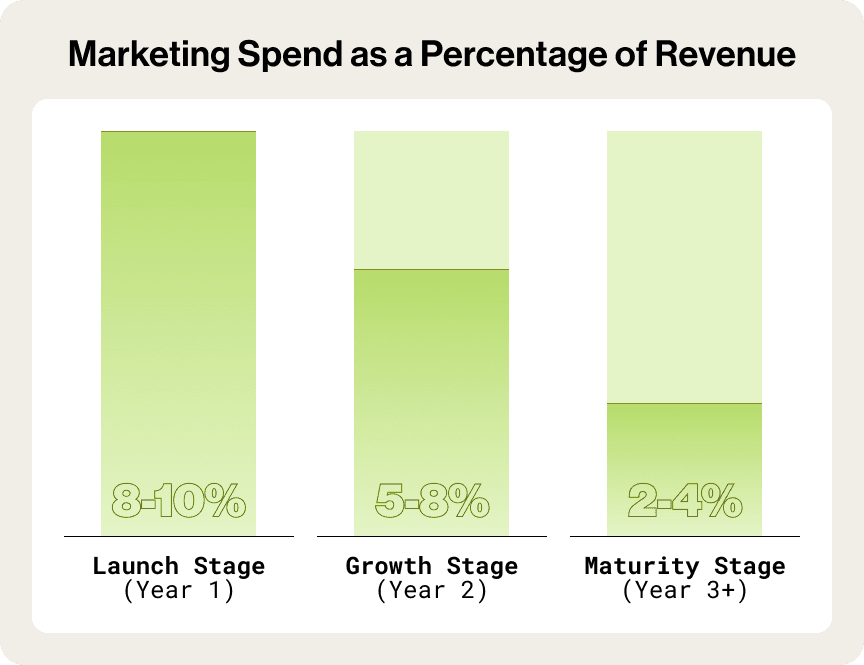
Launch Stage (Year 1)
Marketing Spend: 8–10% of revenue
Focus on foundational efforts: website setup, SEO, initial customer acquisition, and establishing local brand presence.
Growth Stage (Year 2)
Marketing Spend: 5–8% of revenue
Expand paid advertising, increase SEO efforts, enhance content creation, and prioritize loyalty and retention programs.
Maturity Stage (Year 3+)
Marketing Spend: 2–4% of revenue
Refine loyalty initiatives, selectively leverage paid advertising, and focus on maximizing customer lifetime value. Aligning your marketing budget to your dispensary’s lifecycle and market realities ensures sustainable growth, optimized ROI, and lasting success.
Washington's intense competition and high customer acquisition costs justify higher marketing budgets than less competitive markets.
Choosing Technology Vendors That Power Marketing Success
Your technology's interoperability determines your marketing execution capabilities and compliance adherence. Selecting the right POS system, CRM platform, and supporting tools creates the foundation for scalable, compliant, integrated marketing operations.
Choosing Your Online Menu & POS System
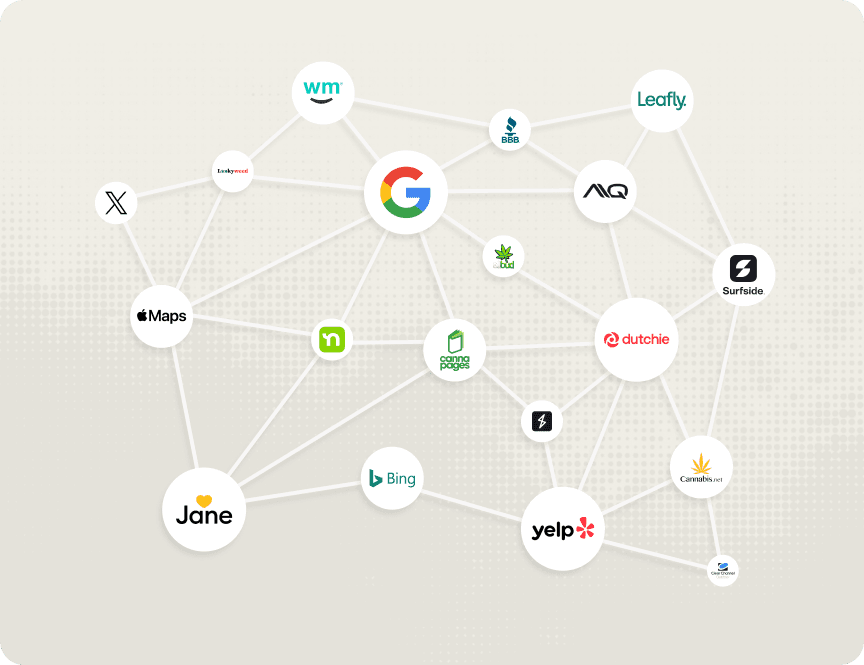
Your POS system should seamlessly integrate real-time inventory across in-store terminals, online menus, and third-party marketplaces (Leafly, Weedmaps). Maintaining accurate product availability across customer touchpoints prevents "out-of-stock" disappointments and fosters consumer trust that displayed inventory accurately reflects what's actually available.
A modern POS should provide granular analytics on purchase history, best-selling products, peak shopping times, and sales by product category, brand, and budtender—giving you data for intelligent marketing decisions and automatic compliance with Washington's CCRS tracking system. Despite CCRS data being incomplete and unreliable (as confirmed by a 2025 legislative audit), robust internal POS analytics become your primary source of business intelligence.
As an Agency Plus partner, we are biased, and for good reason, towards Dutchie. Other strong options include Jane, Treez, and Flowhub depending on your operational needs.
Selecting a Cannabis-Focused CRM
Beyond transaction processing, you need systems that understand cannabis consumer behavior patterns. Cannabis-focused CRMs like Springbig, Alpine IQ, or Happy Cabbage enable customer segmentation by purchase recency, frequency, and monetary value while supporting multi-channel communication across email, SMS, push notifications, and loyalty programs.
In Washington's competitive market with 1,000+ dispensaries and 43.5% tax burden, your CRM must enable precise segmentation and personalization. Washington's advertising restrictions make owned media (email/SMS) your most valuable marketing channel—generic mass messaging wastes budget and damages brand perception among price-sensitive consumers who compare options before every purchase.
Integration and Compliance Requirements
Select vendors that interact seamlessly. Real-time synchronization between POS, CRM, loyalty platforms, and CCRS tracking ensures accuracy across customer touchpoints while maintaining compliance. Built-in age verification, automated consent management for TCPA compliance, and audit trails for all customer communications reduce administrative burden while keeping your operations compliant with Washington's regulatory requirements.
Technology that doesn't integrate creates liability and wastes opportunities.
Implementing Your Dispensary Marketing Strategy
Effective dispensary marketing requires orchestrating multiple channels to create seamless customer experiences that drive acquisition, conversion, and retention. Success (and profit) comes from optimizing each channel individually while ensuring they work cohesively.
Website Design & Development – Your Digital Storefront
- First impressions drive trust: Most consumers form opinions about your dispensary within seconds, and a strong design instantly converts visitors into customers.
- Mobile optimization matters: Over 70% of cannabis customers browse dispensary websites via mobile; fast-loading, seamless mobile experiences significantly boost conversions.
- Serve as a trusted guide: Your website should integrate real-time inventory, robust product details, and educational content, positioning your dispensary as your top salesperson.
- Optimized user journey: Minimize friction and help consumers find what they want when they want through intuitive navigation, accurate inventory updates, and clear calls to action.
Local SEO – How Customers Find You
- Visibility at the right moment: Most cannabis consumers visit dispensaries within 24 hours of an online search; ranking at the top locally translates to traffic, foot traffic, and ultimately sales.
- Optimized Google profiles: Information-rich, regularly maintained Google Business Profiles will attract more visitors and foster more consumer trust than standard listings.
- Reviews matter: Frequent positive online reviews improve search rankings and build credibility. Solicit feedback and respond professionally to demonstrate your commitment to customer satisfaction.
- Local content connects: Create and promote localized content highlighting local cannabis culture, events, and community involvement to capture "dispensary near me" searches.
Email & SMS Marketing – Bringing Back Regulars
- Turn visitors into subscribers: Incentivizing email and SMS sign-ups builds your list, a long-term asset, and significantly contributes to repeat visits and increases customer lifetime value.
- Segmentation drives sales: Group customers by purchase habits and preferences to personalize marketing and deliver personalized, relevant communications that outperform generic messaging.
- Automate to scale engagement: Maintain personal touchpoints through automated welcome series, re-engagement campaigns, and birthday rewards.
- Compliance handled seamlessly: Focus on customer relationships by leveraging marketing platforms with built-in age verification and regulatory compliance.
Paid Advertising – Amplifying Your Reach
- Multi-channel impact: Integrate campaigns across digital ads, community sponsorships, and local events to deliver substantially higher engagement than single-channel strategies.
- Target strategically: Use geographic, demographic, and behavioral targeting to reach compliant adult audiences.
- Community partnerships amplify reach: Collaborate with local organizations and events to expand your advertising influence.
- Track to optimize: Implement unique tracking methods, such as dedicated phone numbers and custom landing pages, to measure advertising effectiveness and continually refine your marketing spend.
Washington Dispensary Marketing FAQs
Can dispensaries advertise in Washington?
Yes, but within strict restrictions defined by WAC 314-55-155. Washington permits cannabis advertising through multiple channels but prohibits content and placements that could reach minors or make prohibited claims.
Permitted channels:
- Websites (with age-gating)
- Print media (with adult audience verification)
- Radio advertising (adult-focused stations)
- Billboards and transit advertising (with restrictions)
- Cannabis-specific digital networks
Prohibited content:
- False or misleading statements
- Promotion of over-consumption
- Claims of therapeutic or curative benefits
- Images appealing to youth
- Depictions of cannabis consumption
- Glamorizing cannabis use
Placement restrictions:
- No advertising within 1,000 feet of schools, parks, playgrounds, libraries, or transit centers
- Outdoor signage limited to two building-attached signs with plain text
- Billboards cannot depict cannabis plants or products
- All outdoor advertising must include "21+" warning
Major platforms like Google, Facebook, and Instagram prohibit cannabis advertising regardless of state law. Washington dispensaries must leverage local SEO, email/SMS, compliant display networks, and community engagement.
Are dispensaries in Washington profitable?
It depends. Washington's combination of intense competition, oversupply, and high tax burden creates challenging economics, but profitable operations remain possible through strategic differentiation and operational excellence.
Market challenges:
- 1,000+ licensed retailers competing for customers
- Growers producing 2-3x more cannabis than retailers sell
- 43.5% total tax burden (37% excise + 6.5% sales tax)
- 30-40% of consumption still happening in illicit market
Profitability factors:
Top performers thrive: Zips Cannabis (Seattle), Main Street Marijuana East (Vancouver), and other leading dispensaries generate $1 million+ in monthly sales, demonstrating profitability is achievable with strong execution.
Location advantages: High-traffic urban locations and underserved markets generate superior volumes justifying premium rents and marketing investments.
Operational efficiency: Lean operations, optimized labor scheduling, and strategic inventory management enable sustainable margins despite wholesale price compression.
Customer retention: Dispensaries that build loyalty and increase customer lifetime value achieve profitability even with high customer acquisition costs.
Industry estimates suggest net margins of 8-15% for well-operated dispensaries. Operators who optimize for volume, retention, and efficiency can thrive; those who don't become market exits.
How much does a dispensary owner in Washington make?
Owner income varies dramatically based on location, operational efficiency, and competitive positioning.
Single-location independent operators: Owners might generate $60,000-$120,000 in annual take-home profit after expenses depending on location and market position.
Multi-location operators: Successful chains with 3-5 locations can generate $200,000-$400,000+ in owner income through economies of scale and operational leverage.
Top-performing locations: High-volume urban dispensaries generating $5-10 million in annual revenue can produce substantially higher owner income, but also require significant capital investment and operational sophistication.
However, many Washington dispensaries reinvest early profits into expansion, marketing, and operational improvements rather than maximizing owner compensation. Owner income depends entirely on ability to differentiate, control costs, build customer loyalty, and optimize marketing efficiency in an intensely competitive market.
How does Washington's tax structure compare to other states?
Washington's 43.5% total tax burden (37% excise + 6.5% sales tax) ranks among the highest nationally.
State comparisons:
- Washington: 43.5%
- California: 30-35% (depending on local taxes)
- Oregon: 17-20% (17% excise + up to 3% local)
- Colorado: 27.9% (15% excise + 12.9% combined state/local sales tax)
- Illinois: 30-40% (depending on THC level and local taxes)
Washington's high tax burden influences consumer behavior significantly, driving price sensitivity and comparison shopping. Dispensaries must compete on perceived value rather than just price.
Working with Cannabis Marketing Professionals
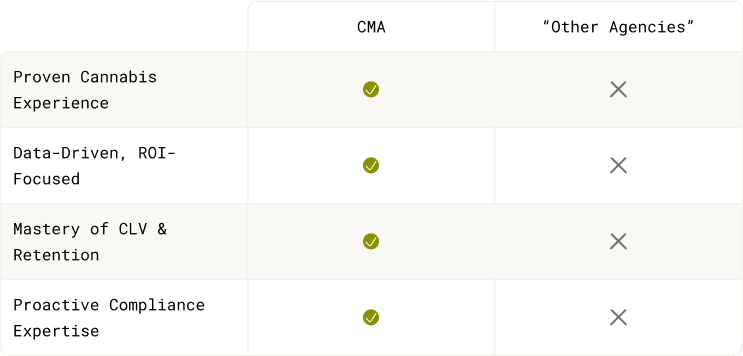
Building effective dispensary marketing in Washington requires specialized knowledge that general marketing agencies lack. Washington's unique combination of strict advertising restrictions, unreliable state data systems, intense competition, and high tax burden demands expertise in cannabis-specific SEO, compliant advertising, retention marketing, and data analytics.
If you decide to work with a Washington Cannabis Marketing Agency, here are a few things to remember:
- Prioritize proven cannabis experience. When evaluating potential partners, it’s essential to understand precisely what a cannabis marketing company does and whether it's worth the investment, ensuring you choose an agency aligned with your dispensary’s unique goals.
- Demand data-driven approaches. Your agency should focus on measurable results rather than vanity metrics, providing specific ROI examples and performance benchmarks from comparable dispensary clients. They should understand cannabis customer lifetime value, acquisition costs, and retention strategies specific to the industry.
- Ensure cultural alignment. Cultural alignment becomes crucial because cannabis marketing requires an authentic understanding of the community and customer mindset.
- Verify compliance processes. Comprehensive compliance processes should be built into every campaign and strategy. Your marketing agency should understand Illinois cannabis regulations better than you do, with systems and procedures that prevent violations before they occur rather than fixing problems after they happen.
Moving Forward with Marketing Your Washington Dispensary
Washington's cannabis market is mature, oversupplied, and dominated by intense competition. With over 1,000 licensed retailers fighting for customers while growers produce 2-3x more cannabis than the market can absorb, survival demands strategic sophistication most operators lack.
But market maturity creates opportunities for operators who execute strategically. Customer behavior patterns are established and predictable. Category preferences are clear (77% of sales concentrate in flower, vapes, and pre-rolls). Differentiation strategies that work are proven and replicable.
Master the fundamentals first.
You must optimize your dispensary's Google Business Profile and establish a consistent review generation process. Your website must load within 3 seconds, function properly on mobile devices, and deliver educational value. Your email and SMS infrastructure must capture opt-ins and automate retention campaigns. These foundational elements drive discovery, conversion, and retention; everything else is amplification.
Identify your primary constraint.
Your biggest marketing challenge likely falls into one of three categories: building initial visibility in a market with 1,000+ competing dispensaries, converting website traffic and walk-ins into transactions despite 43.5% tax burden driving price sensitivity, or turning one-time buyers into weekly regulars when customer acquisition costs remain high.
Identify your constraint, then allocate resources to solve it. Dispensaries struggling with visibility should invest heavily in local SEO and Google Business Profile optimization. Dispensaries with traffic but low conversion should focus on budtender training, product quality signaling, and value communication. Dispensaries with customers but poor retention should prioritize loyalty programs, personalized email marketing, and community engagement.
Build systems that maximize customer lifetime value.
Track the nine BNCHMRK KPIs monthly. Monitor customer acquisition cost, retention rates, purchase frequency, and lifetime value by customer segment. Use data to identify which marketing channels drive profitable customer acquisition and which waste budget.Build loyalty programs that offset tax burden perception through meaningful rewards. Create educational content that drives cross-category purchasing (flower buyers also purchasing vapes and pre-rolls). Optimize every touchpoint to increase customer satisfaction and lifetime value.Washington's cannabis market is mature and unforgiving. It rewards execution, not analysis.
About The Cannabis Marketing Agency
The Cannabis Marketing Agency: Cannabis marketing experts making your dispensary the one everyone talks about (in a good way).
We make your dispensary the local favorite — the spot people talk about, shop at, and keep coming back to.
+4 Years Growing Dispensaries: We don't "learn on your dime".
Trusted by Dispensaries in 18 Markets: From Cali to Mass, if it’s legal, we’ll help you win.
For DIYers who hate learning the hard way.
Want More Dispensary Customers?
We grow dispensaries like it’s our day job (because it is). Ever wonder what we’d do for yours? Let’s find out.
Get Started